
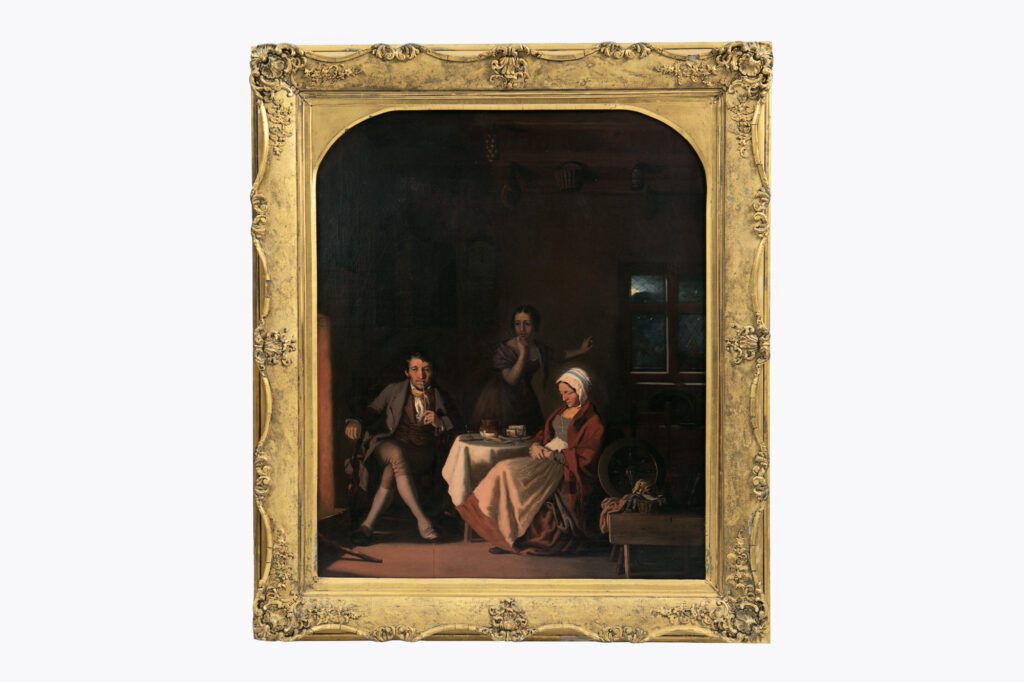
From a symbol of wealth and status, to serving as a bridge between craftsmanship and architecture, gilded frames of paintings and mirrors have long stood as works of art in their own right. The evolution of gilt frames finds its origins in architectural church ornaments, an evolution which eventually transformed from a symbol of worship to that of wealth and prestige. In the pre-Renaissance world of Ancient Byzantium, the use of gold frames can be found in abundance within the context of art pertaining to Christian iconography.
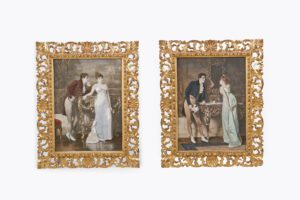
9969 – 19th Century Pair of Coloured Prints
However, as we move into the post-Renaissance world, from the 17th through the 19th century, there is a departure from the tradition of gilding frames solely intended for church ornamentation. The establishment of a hierarchy of genres in painting by European art academics, wherein history paintings — those of religious or historical scenes — and portraiture, were recognized as paintings of greater status than that of still life paintings or landscapes, sparked an increasing demand to signify the greater import of these paintings. As such, we see the exponential use of large sculptural gilded frames to house these prestigious works.
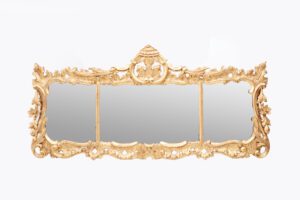
11166 – 18th Century Gilt Overmantel Mirror
These frames retained a connection to their Christian past through their form, which harkened to the complex architectural features of gothic cathedrals. These frames are often complete with intricately carved motifs in deep relief, spiralling foliage and acanthus leaf detailing, ornamented by figures of animals or flora, and crowned by some form of carved motif, from an intricate frieze to a centred mask. On occasion, the gold frames were larger than the picture or mirror it held, marking the frames as works of art in their own right.

11510 – 19th Century oil on canvas painting by William Shayer Sr. (1787-1879)
Art has long been a means to exalt those who it depicts, as such, it only follows that the frame of a portrait should further serve to glorify the sitter. Not only does the gilded nature of a frame express the wealth and status of the patron commissioning the portrait, but the awe-inspiring craftsmanship of the carved surface communicates the propriety of the sitter.
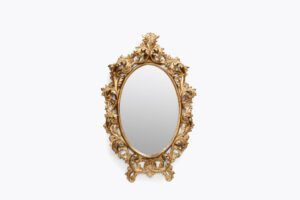
11010 – 19th Century Gilt Rococo-style Wall Mirror
Whether housing a portrait of a regal patron, a striking history scene, or simply a mirror, the impact of the gilt frame cannot be understated, it is a paragon of luxury and an illustration of artistry in its own right. O’Sullivan Antiques is home to an extensive collection of breathtaking gold frames. For any inquiries, please email us at info@osullivanantiques.com. We are always happy to hear from you.
