
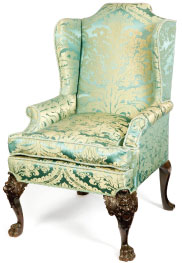
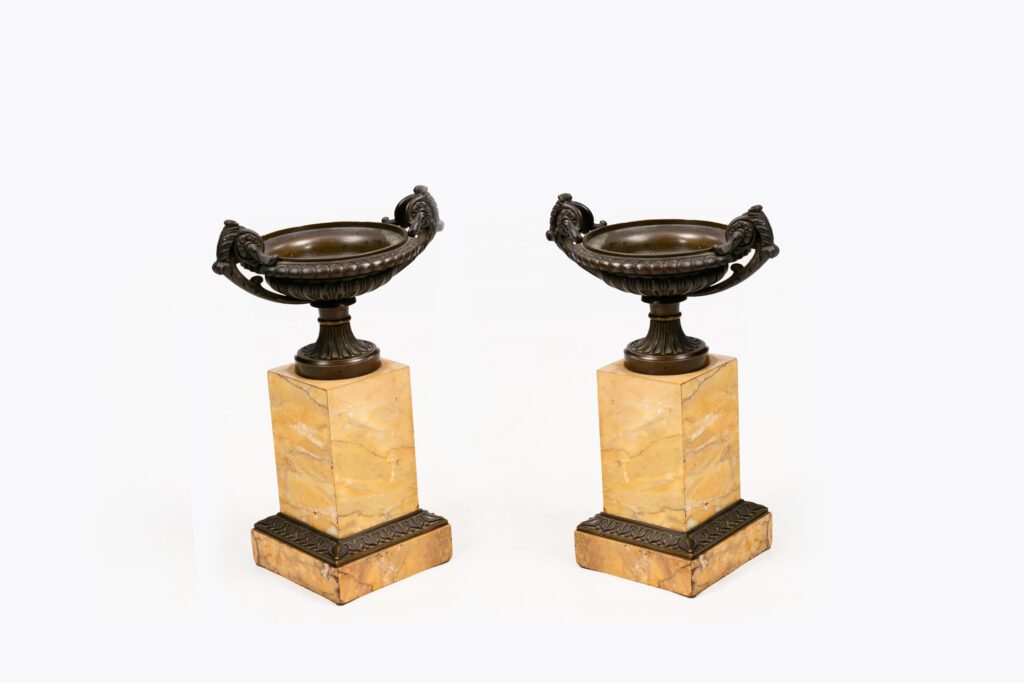
The Neoclassical art movement that developed from the mid-18th century represented a rebellion against the ornate Baroque and Rococo styles that preceded it, turning instead to the art and architecture of ancient Greece and Rome for inspiration. The excavation of the buried Roman cities of Pompeii and Herculaneum in the 1730s and 1740s caused a sensation across Europe, sparking a fashion for all things classical.
Britain and Ireland took to this trend with enthusiasm. Wealthy aristocrats completed a “Grand Tour” through Continental Europe, with a focus on France and Italy, often returning home eager to recreate what they had seen and admired. Robert Adam, the era’s most influential British designer, toured Italy in the 1750s and adapted classical motifs into a light, elegant style used across noble country houses that he ornamented with delicate plasterwork, columns, and classically-inspired furniture and fireplaces.
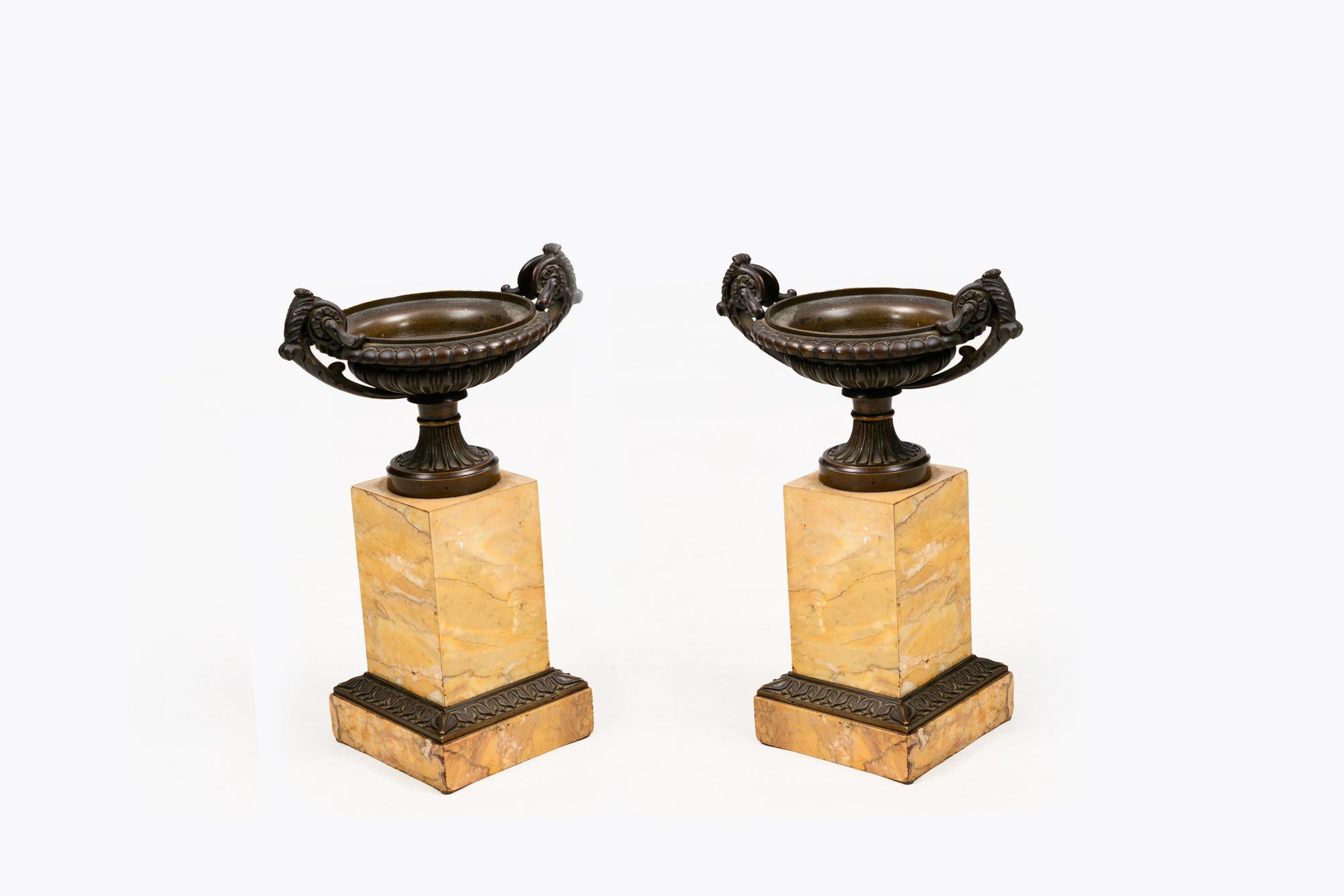
11228 – 19th Century Neoclassical Pair of Bronze Tazzas
Neoclassical references are likewise a defining feature of fine furniture from this period.. Thomas Chippendale moved from his earlier Rococo work into a more restrained Neoclassical style later in his career; George Hepplewhite became known for lighter furniture with shields, urns, and swags; Thomas Sheraton favoured straight lines, fine inlay, and slender proportions. Together they translated Adam’s architectural language into furniture for fashionable homes.
The classical taste extended to ceramics too: Josiah Wedgwood developed jasperware, a matte stoneware — often in his signature pale blue — decorated with white relief designs copied from classical vases and cameos, bringing antiquity into middle-class homes as well as aristocratic ones.
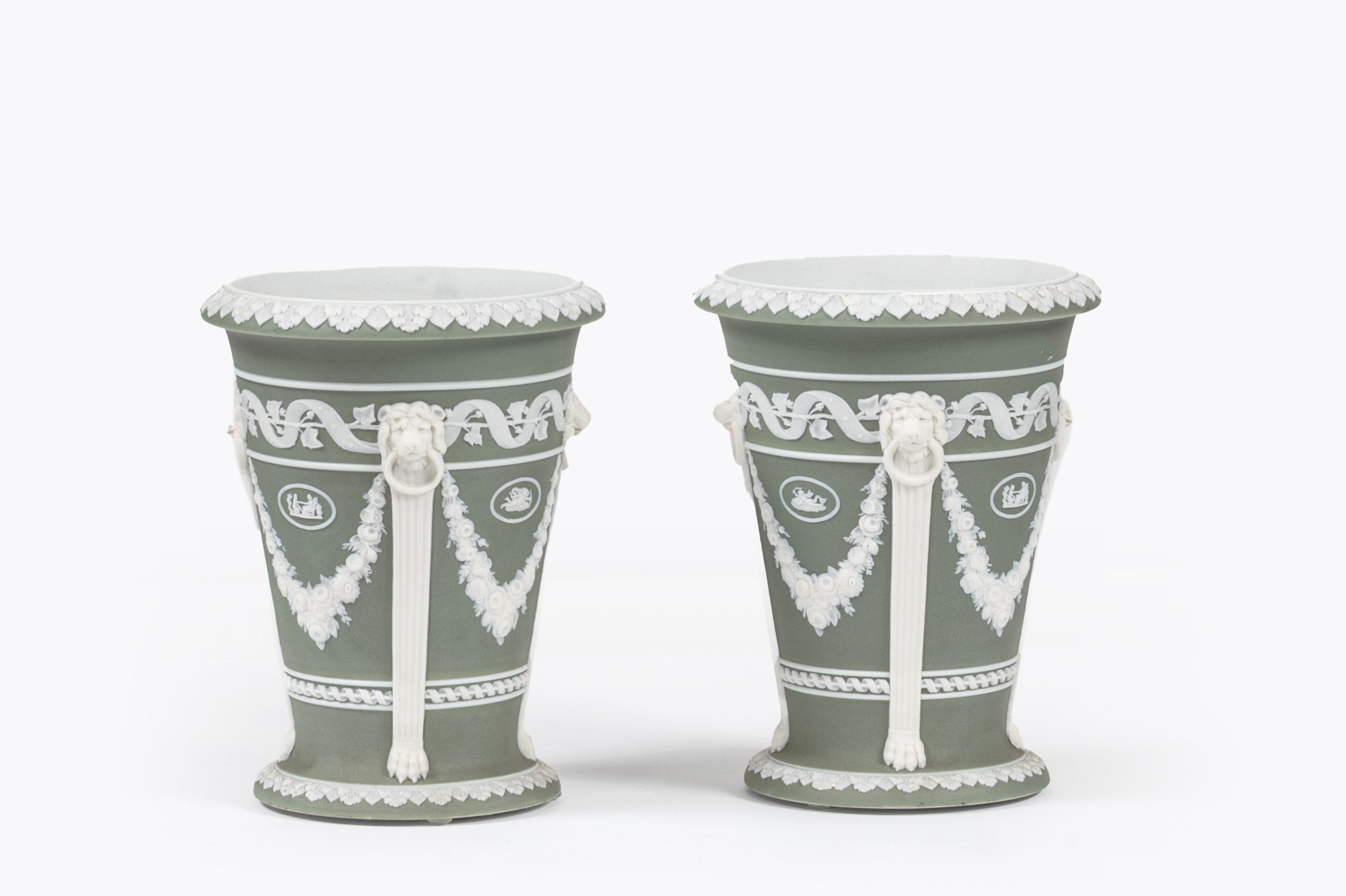
11502 – Pair of 19th Century Wedgwood Jasperware Urns
Ireland, closely tied to Britain, developed its own thriving Neoclassical scene largely, but not exclusively, centred on the capitol city, Dublin. The English-born architect James Gandon designed the city’s Custom House and Four Courts, grand riverside buildings with columned porticoes and domes drawing on classical and Palladian precedent. Irish stuccodores like Michael Stapleton adapted Adam’s delicate plasterwork style — urns, swags, honeysuckle motifs — for Dublin’s Georgian townhouses, following earlier Italian-trained plasterers like the Lafranchini brothers. The Italian craftsman Pietro Bossi added to this with his fine scagliola fireplace inlays, helping make Dublin and the county estates of Ireland’s grandees showcases of Neoclassical style.
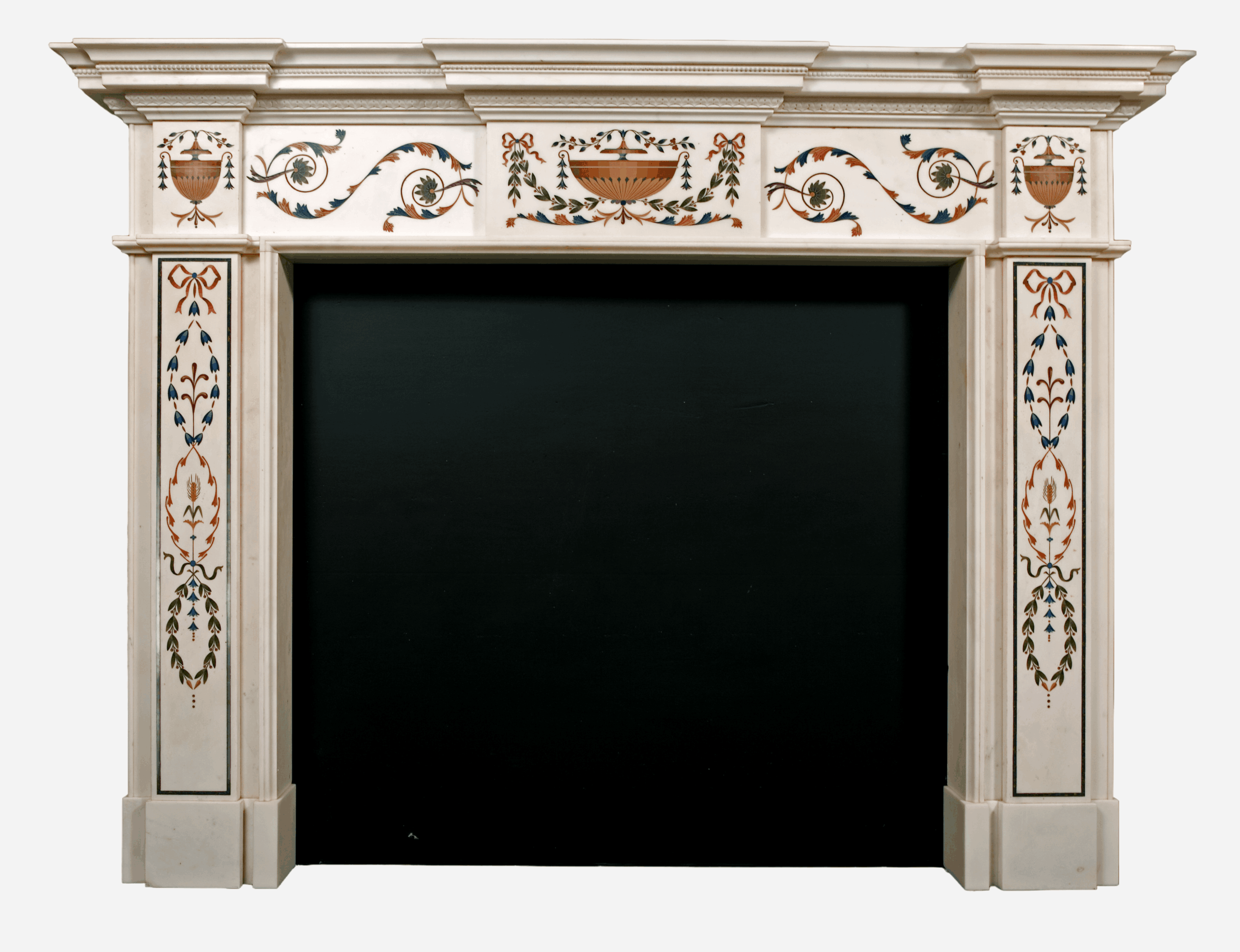
11570 – Late 18th Century Pietro Bossi Carrara marble and scagliola chimney piece
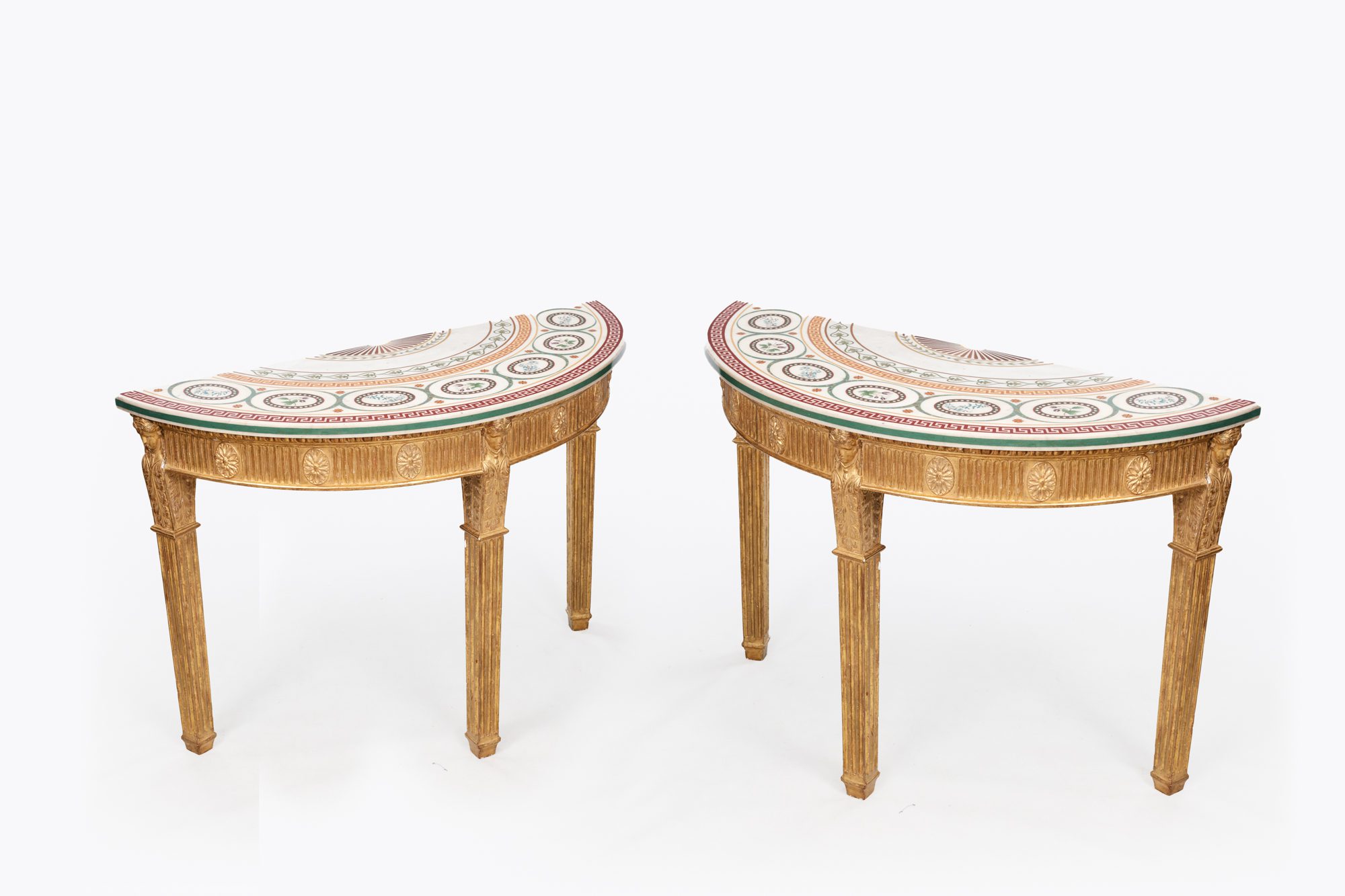
11212 – 18th Century Pair of Bossi Demi-Lune Gilt Side Tables
Unlike in France, where Neoclassicism became entangled with revolutionary republicanism, in Great Britain and amongst Ireland’s Ascendancy elite, it was embraced by those who saw in antiquity a flattering reflection of their own values — reason, order, and good taste. Grand townhouses and estates in London, Bath, and Dublin let the wealthy display education and status, while echoes of Britain’s earlier Palladian architecture made Neoclassicism feel like a natural continuation rather than a foreign import.
By the early 19th century, Neoclassicism, prized for its harmony and restraint, was the dominant style for grand public buildings and private homes across Britain and Ireland.
Qualities of simplicity and harmony were adopted across writing, painting, architecture, and interior design. Some common characteristics across the arts include symmetry, minimal use of colour, and precise definition of forms and figures. For any inquiries, please email us at info@osullivanantiques.com. We are always happy to hear from you.
