
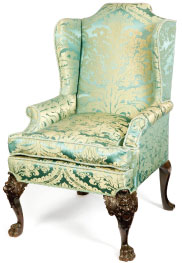
Christopher Nolan’s ‘The Odyssey’ has sparked a new wave of curiosity about Homeric epic and all things Classical, sending audiences back to the source material. This is not the first time, of course, that Classical Antiquity is ‘having a moment’. The influence of Classical Antiquity in design has seen a number of revivals throughout history.
For instance, the rediscovery of Herculaneum in 1738, and Pompeii a decade later, sparked new enthusiasm for classical architecture and design in the 18th Century. Grand Tourists and European and New World elites could not get enough of neoclassical design.
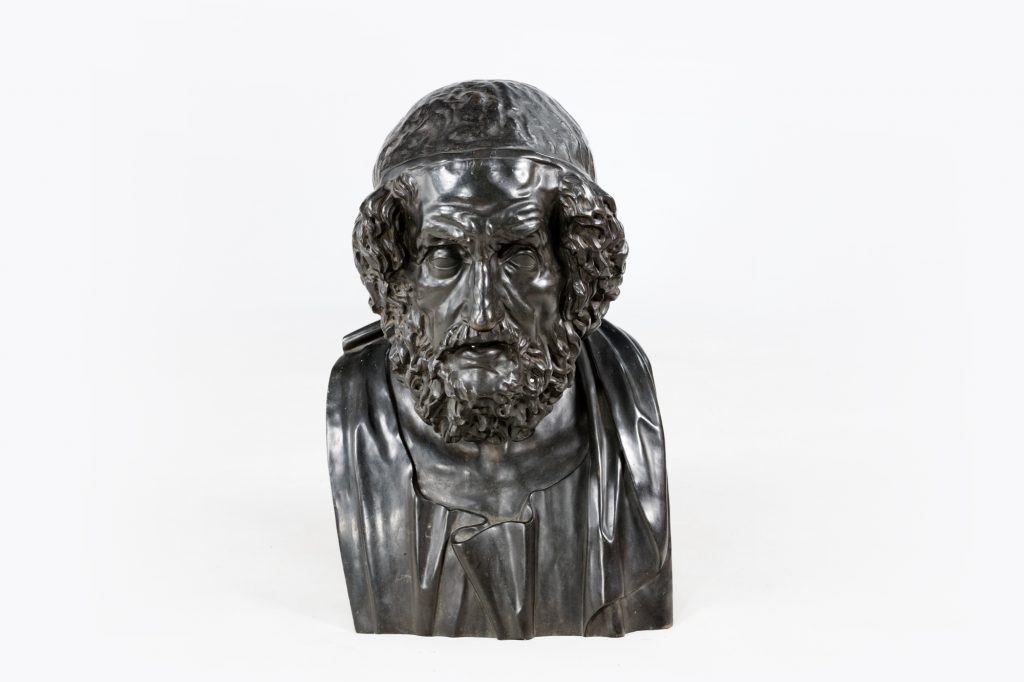
The strategic placement of grand busts in bronze, marble and terra cotta of Homeric heroes and historical figures not only brought a sense of grandeur to formal gardens and interior spaces; they also made a statement about their owners’ social status. We have several fine examples of classical busts and statues in our Francis Street gallery, like the imposing bronze depicting Homer and the marble statue of Sophocles.

10849 – 19th Century Bronze Bust of Homer
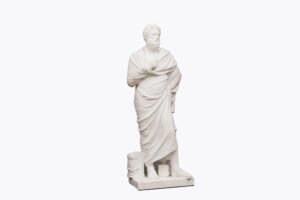
11518 – 19th C Statuary Marble Figure of Sophocles
The English potter, Josiah Wedgwood, turned the practice of producing classical portraits into a business empire, becoming justly renowned for the portrait medallions and jasperware relief plaques, in addition to many other decorative objects, produced in his evocatively named ceramics factory, the Etruria Works, in Staffordshire, England. The Wedgwood green Jasperware plaque pictured below exemplifies Wedgwood’s ingenious interpretation of classical imagery and motifs.
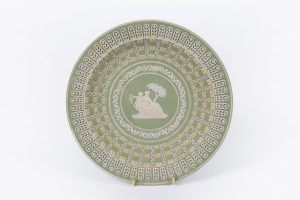
10400 – Early 19th Century Wedgwood Tricolour Jasperware plaque
Other features of Attic design are found throughout the Georgian decorative arts. One such example is the following pair of amphora urns, featuring a dramatic black glazed body, decorated with colourful figural scenes of Greek mythology.
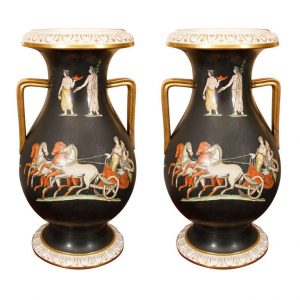
10255 – 19th Century Pair of Porcelain Amphora Urns
Characteristics like columns, friezes, and simple geometric forms, popularized by the Neoclassical revival, were widely incorporated into Late Georgian and Regency architecture and design. Neoclassical features and motifs used in the decorative arts of these eras signified a return to symmetry, order, and classical ideals that appealed to social elites at a time when much of Europe was experiencing social upheaval and war. An exemplary piece is the following mirror, which is defined by its simple, rectangular form and framed by columns and a classical relief frieze.
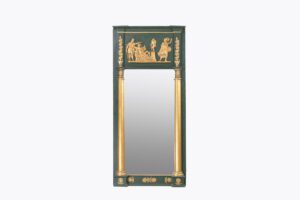
7363 – 19th Century Gilt and Green Pier Mirror
Nolan’s ‘Odyssey’ may be the first time that many are encountering the epic tales of Homer, inspiring them to dig deeper into all things related to Classical Antiquity. Here at O’Sullivan Antiques, neoclassicism is always in style, and we hope that you will come to view the many splendid pieces of 18th and early 19th century furniture and objects d’art in our Francis Street Gallery that exemplify the style.
For any inquiries, please email us at info@osullivanantiques.com. We are always happy to hear from you.
