
Putti, also referred to as cherubs or cupids, are enchanting symbols within the western art canon. Their presence spans from the earliest forms of the classical style within ancient Greece and Rome to their symbolic rebirth during the Renaissance, to their enduring presence within 18th and 19th century interiors as decorative fixtures, marking their influence within western material culture.
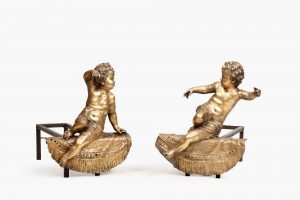
10960 – Pair 19th Century Brass Fire Dogs Modeled As Cherubs
Putti typically appear as winged male infants, often in the nude or occasionally accessorized by a bow and quiver of arrows or draped in minimal fabric. Their Greco-Roman inception imbued the symbol of the putti with connotations of earthly passion and desire. Putti within the Greco-Roman tradition were representations of the pagan god of love, the Greek Eros, or the Roman Cupid, son of Aphrodite or Venus respectively.
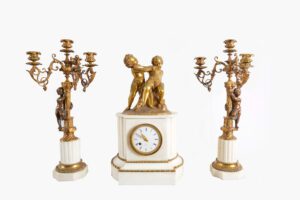
10516 – 19th Century French Gilt Bronze and Marble figural Clock Garniture Set
In earlier traditions, the appearance of cupid within scenes indicated the presence of empyrean love or material lust. However, the Christian adoption of the putti during the Renaissance altered them into angelic figures, serving as onlookers to religious scenes. Within the context of the Renaissance, Putti, typically on the periphery of religious scenes, often impish observers although occasionally taking on an interactive role, denote paradise and spiritual purity. They carry connotations of playful innocence, joviality, and even mischief – perhaps a remnant of their Greco-Roman genesis.
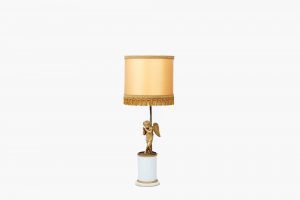
11024 – Neoclassical Style Table Lamp With Winged Cherub Figure
In decorative art of the 18th and 19th centuries, rather than remaining adornments to an arrangement, Putti were regularly featured as the main subject of a composition. The chubby winged figures appear as decorative pieces within 18th and 19th century homes projecting themes of domestic harmony, love, and the enduring luxury and prestige of the classical style. Interior putti, also referred to in the French rococo style as amourette (little love), are often sculptural figures, mantelpiece ornaments, with their figures appearing upon household items, from clocks and candlestick holders to ornate lamps.
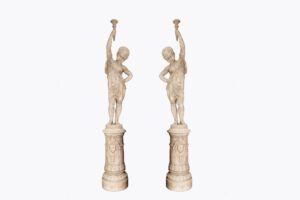
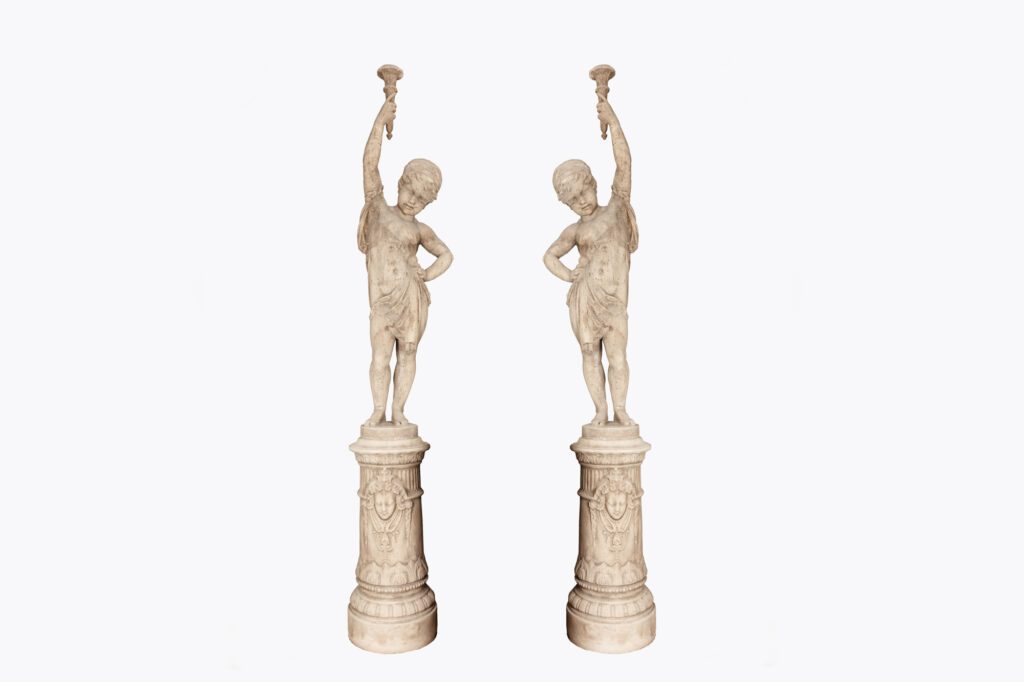
10679 – Pair of 18th Century Italian stone figures of Putti
Throughout our collection at O’Sullivan Antiques, you’ll discover a variety of exquisite antiques adorned with putti. We hope you enjoy these lovely pieces as much as we do.
For any inquiries, please email info@osullivanantiques.com. We are always happy to hear from you.
