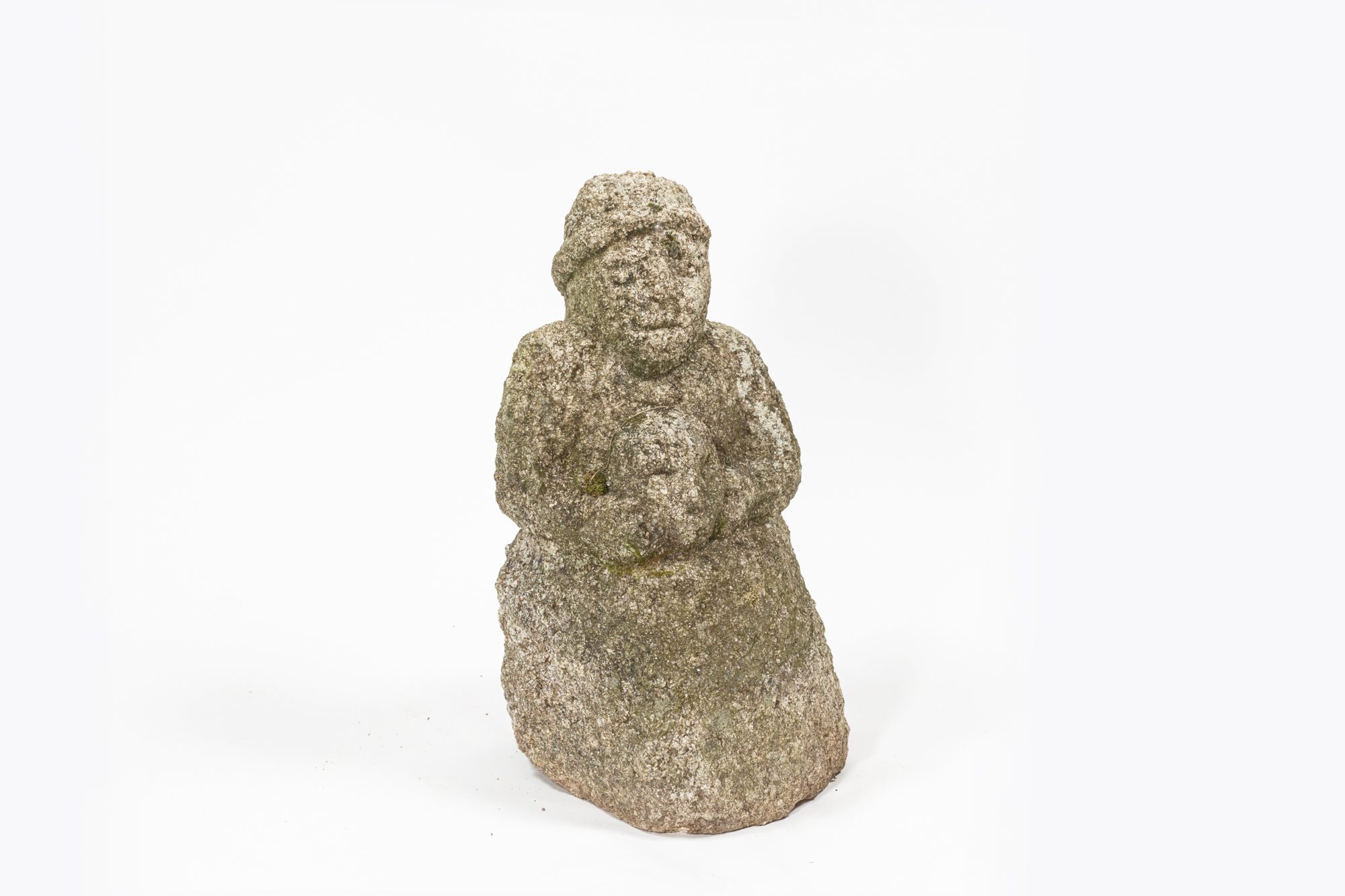
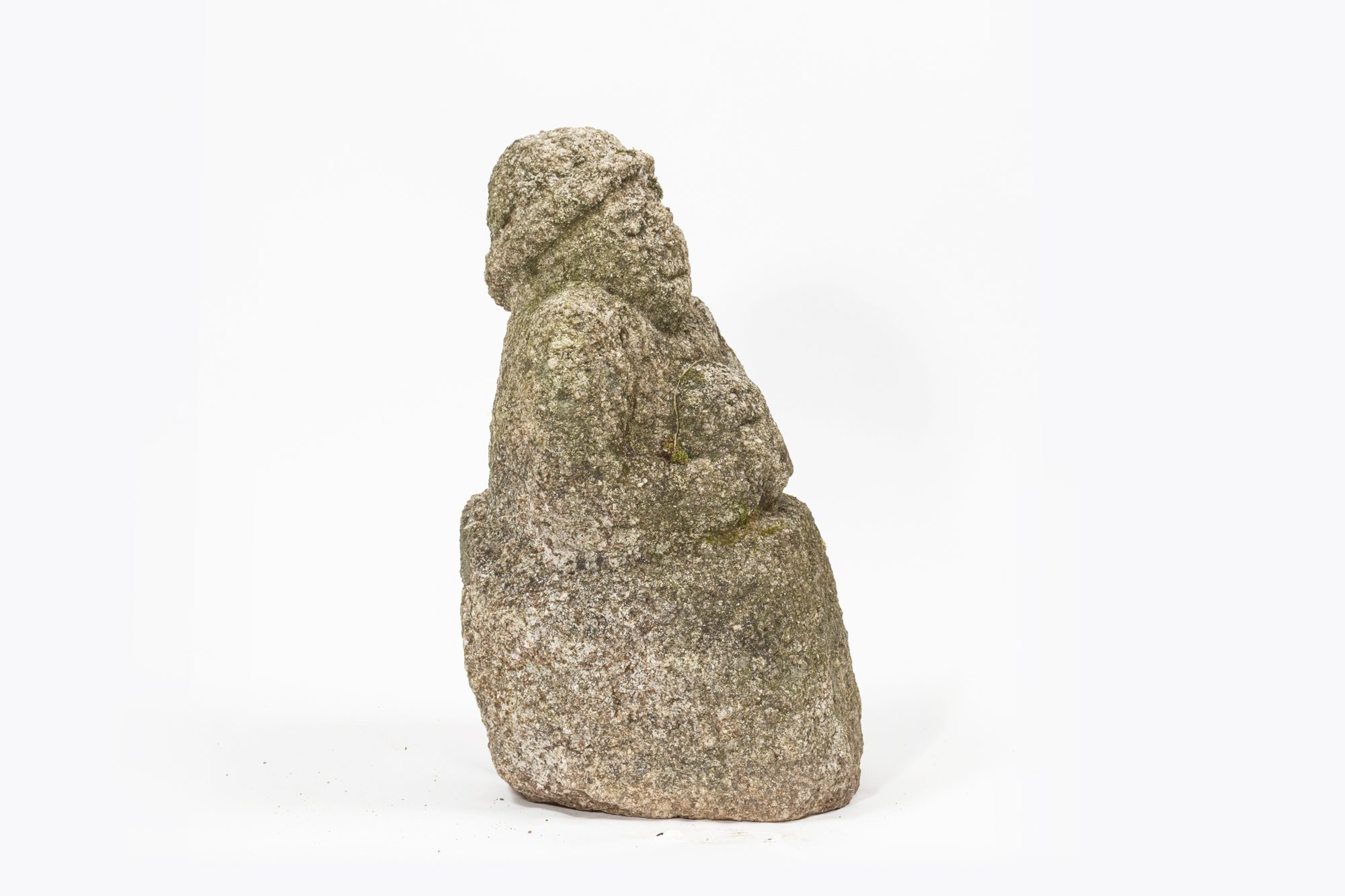


Iron Age Celtic Granite Figure seated on an upright stone with a flat base. The figure’s head features what could potentially be a band or head piece suggesting some form of elite status. More likely, though, it is a depiction of Celtic tonsure, a haircut commonly worn by druids in the Pre-Roman Iron Age. While most recognisable in certain Catholic religious orders, Tonsure can refer to the secular practice of shaving all or part of the scalp to show support or sympathy, or to designate mourning. Additionally, the figure holds a severed head in his lap. Celtic stone idols were often used as the centrepieces of worship in pre-Christian Ireland, with a particular focus on heads. Historians believe that some Celtic tribes collected severed heads and would display them as signs of victory after battle. However, in Great Britain and Ireland historians have suggested that there may have been a ‘Celtic Head Cult’ wherein worshippers believed severed heads could be reanimated when placed on stones or pillars. Decapitated skulls have been found at several Iron Age sites, implying their use in ritual sacrifice. Early Christian monks would have been the primary recorders of these traditions, though, and may have wanted to paint the native population in a more ‘savage’ light when contrasted with their own religious beliefs.
Price on Request